
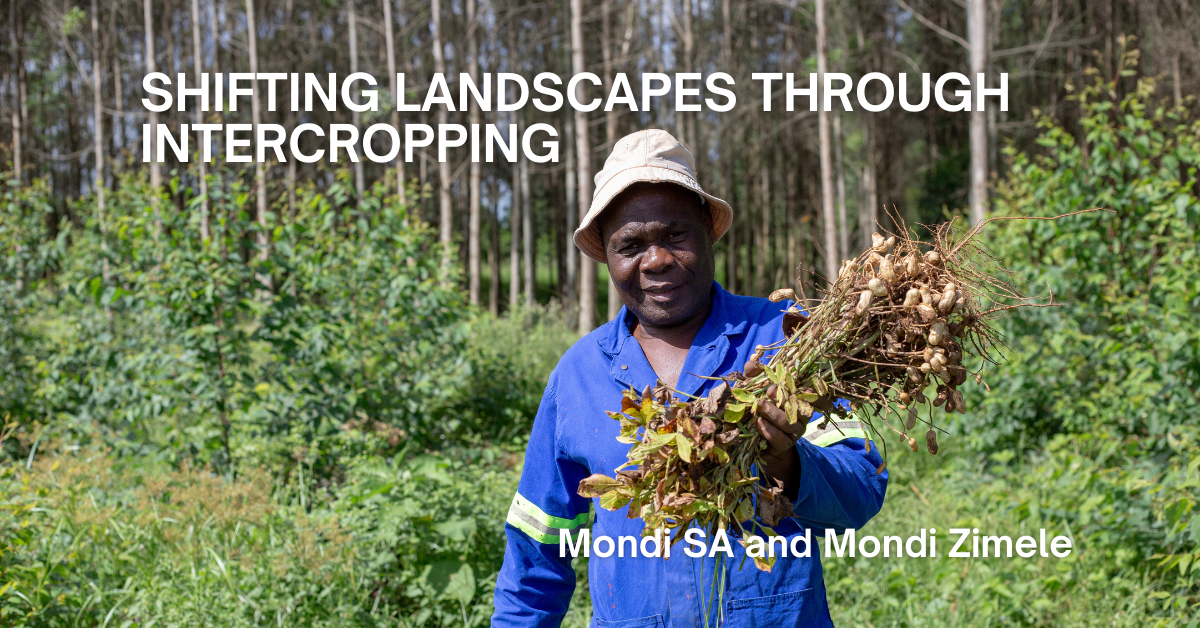
Mondi’s Intercropping project strengthens communities, improves soil health and produces greater yield on available land.
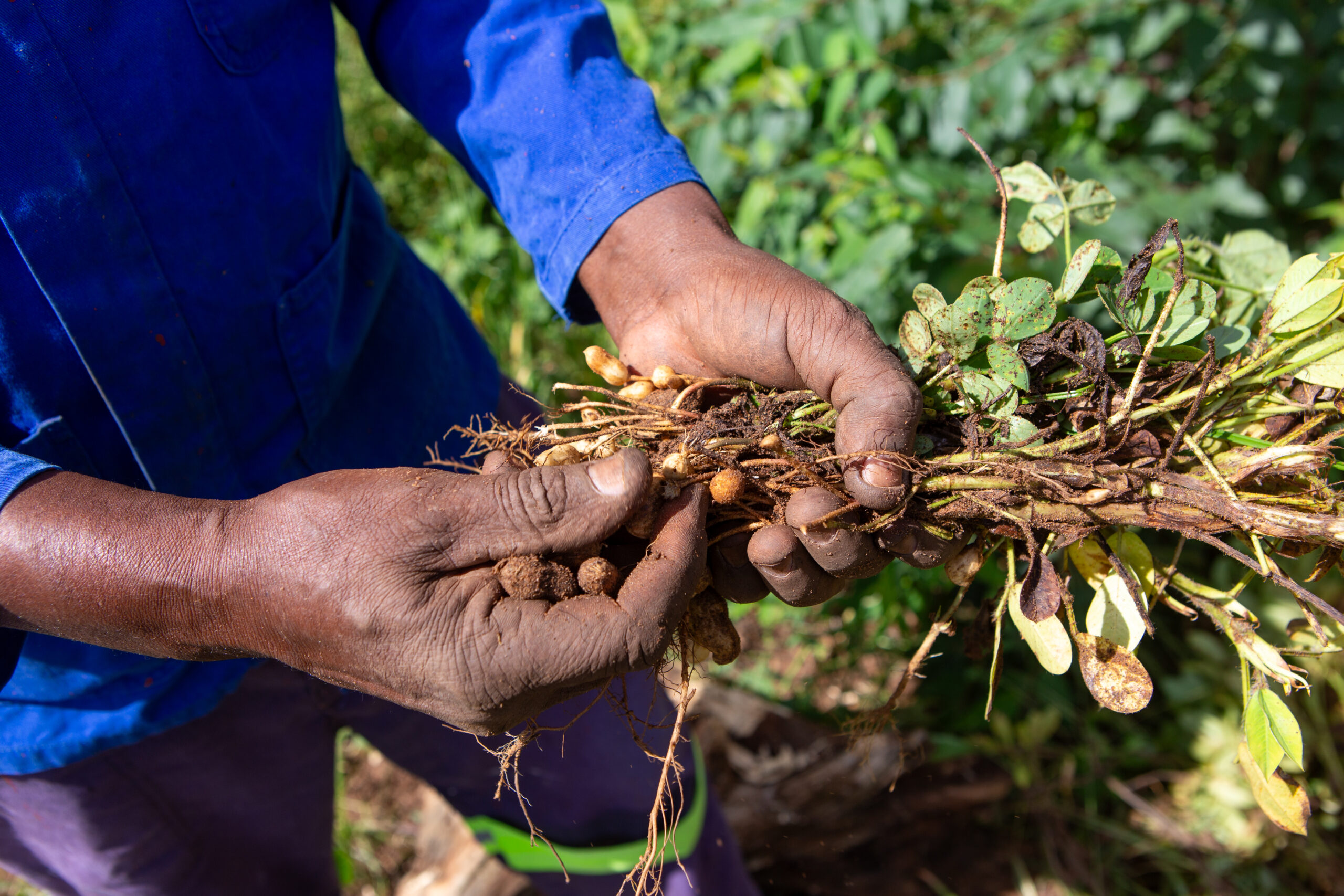
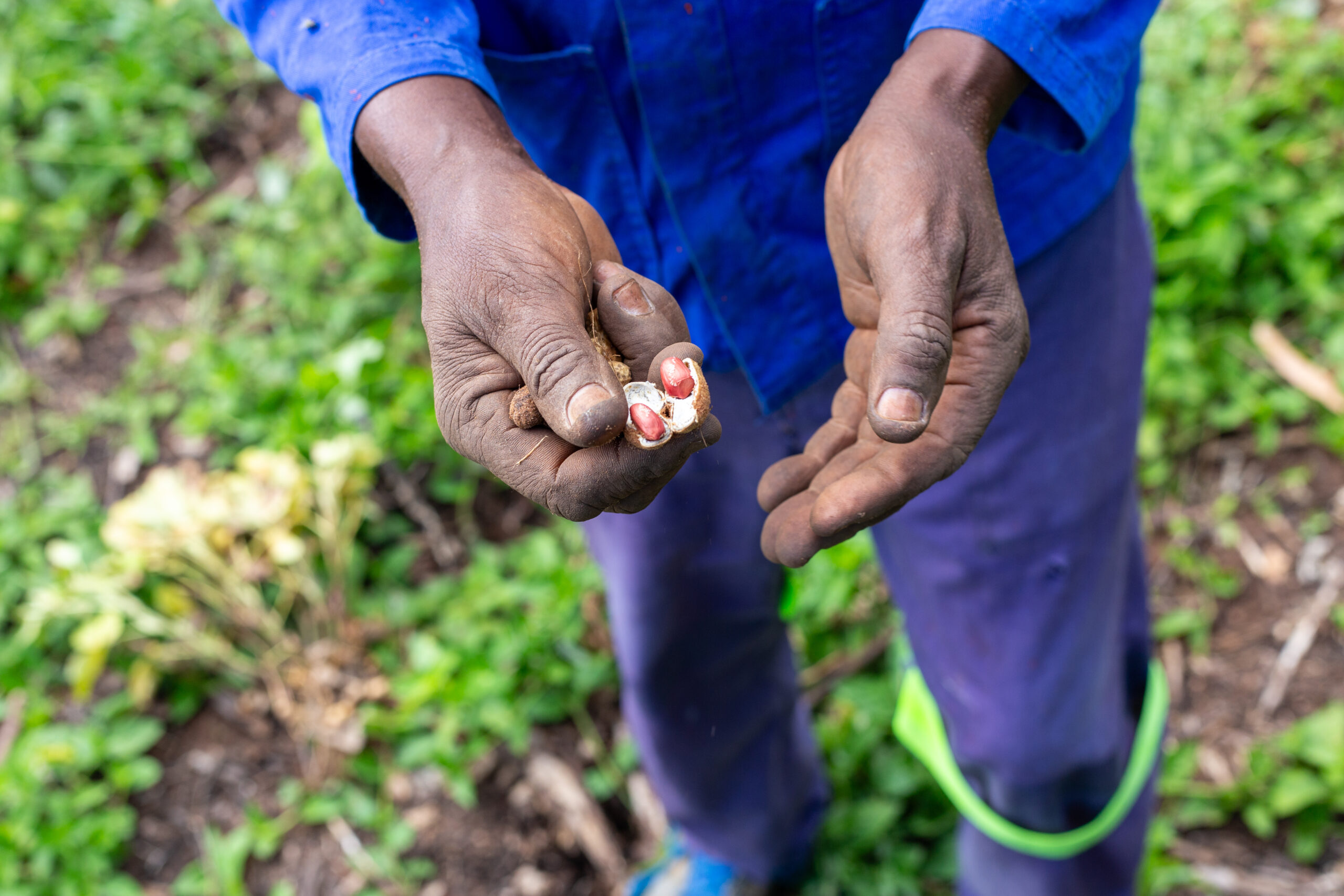
Ground Nut Harvesting Zululand Style
The coastal planes of Zululand in northern KwaZulu-Natal are blessed with fertile soil and good rainfall, which give life to some 18 000 hectares of forestry plantations, sustainably managed by Mondi and its fleet of dedicated contractors.
Forestry is a cornerstone of the local economy, creating employment across a value chain that extends from general labour to timber transport, harvesting, silviculture and conservation.
When travelling the N2 across Zululand, the sea of eucalyptus trees stretches as far as the eye can see. But if you take a closer look, something else is growing among the commercial plantations… Beans, nuts and squashes are filling the gaps between the rows of Eucalyptus, making use of resources and ecological processes that would otherwise not be utilised by a single crop. These small-scale intercropping projects are providing food and a source of livelihood for communities that neighbour the plantations.
The intercropping project falls under the broader Mondi Food Security Programme, which includes honey collecting, community vegetable gardens and household vegetable gardens. These are non-commercial operations, primarily for subsistence, although many of the small-scale farmers are selling their surplus to local markets and their communities.
There are currently 450 farmers registered for the project in the uMfolozi area. Crops being grown include ground nuts, dry beans, jugo beans and a variety of squashes.
The project aims at helping to address food security in the under-developed region, where unemployment is dire, and opportunities are scarce.
“The primary aim of this project is to make sure there is food at home,” says Nosipo Zulu, Mondi Land Manager for Zululand. “We want the farmers to eat first and then sell the surplus to nearby markets.” Incredibly, the small incomes being generated by these rural farmers are playing a vital role in meeting basic needs – covering things like school fees, building costs and food staples.
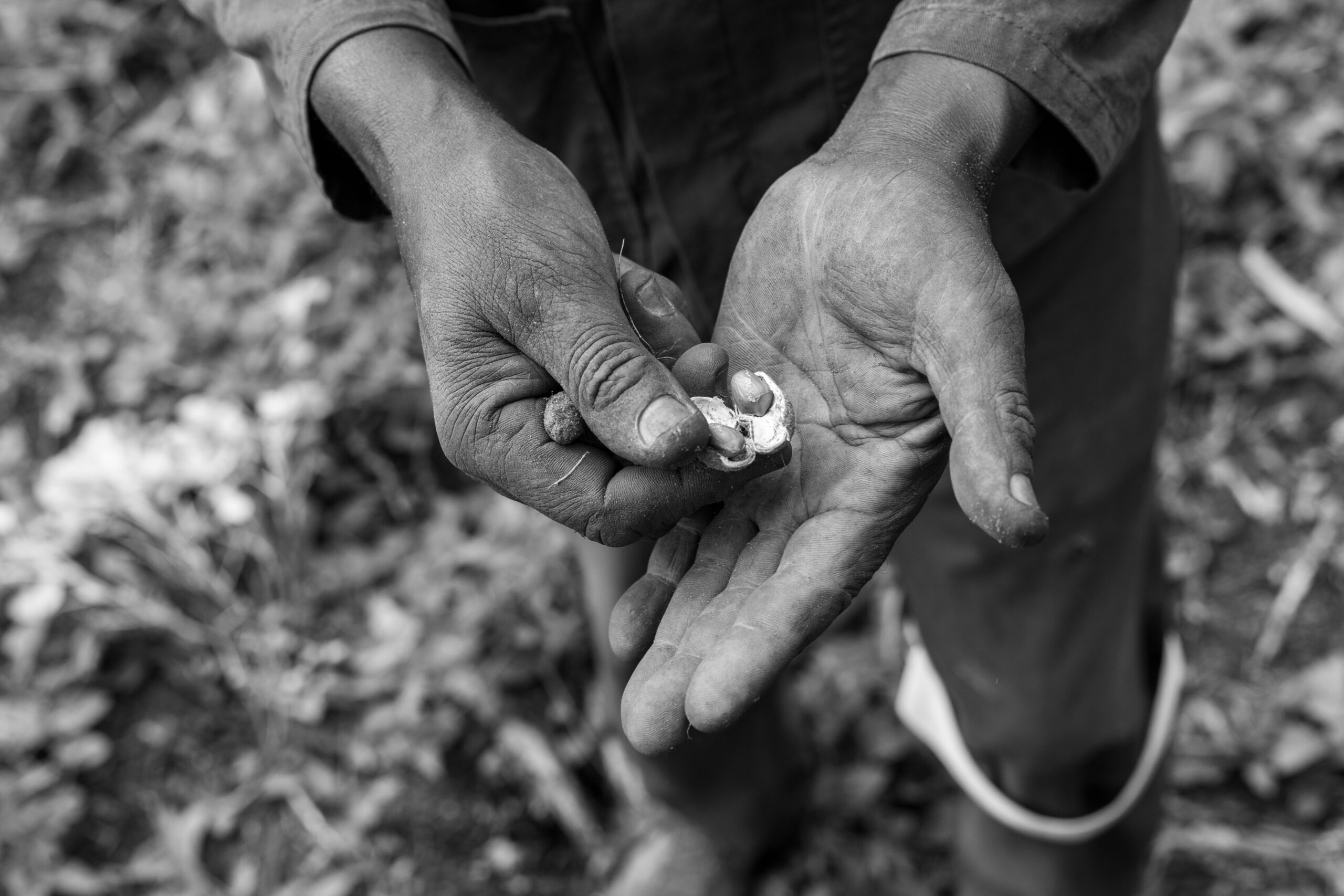
On a hot summer’s morning in the KwaMbonambi area, a dozen community members are toiling up and down the rows of eucalyptus trees, as storm clouds brew on the horizon. It is an exciting time for the community – six months ago, they planted around 100 hectares of ground nut seedlings. For many moons they have nurtured the crop, tending the land with hands and hoes as the hot African sun beats down. Now is the time to reap the rewards of their hard work. Albert Mthethwa uproots a lush, knee-high plant and carefully picks the ground nuts from among the roots.
“A 50kg bag can be sold for R800 in town,” explains Albert in a quiet voice. “I receive a pension, but I have been doing this intercropping for four years now. The money I bring in helps me feed my family of five. I was even able to buy myself a TV cabinet last year! I am very grateful to Mondi for allowing us to share the land.”
As we observe Albert at work, Ntuthuko Mzolo, Mondi’s Community Development Facilitator for the region, reveals how the project is coordinated. “I am the link between the community and the forestry business,” says Mzolo. “Every season I sit with the foresters to see which compartments are to be planted – then I can allocate areas to the local farmers, who come in and plant immediately after the trees have been put in the ground. It is also my role to educate the community on safety and best practices when working in the forests.”
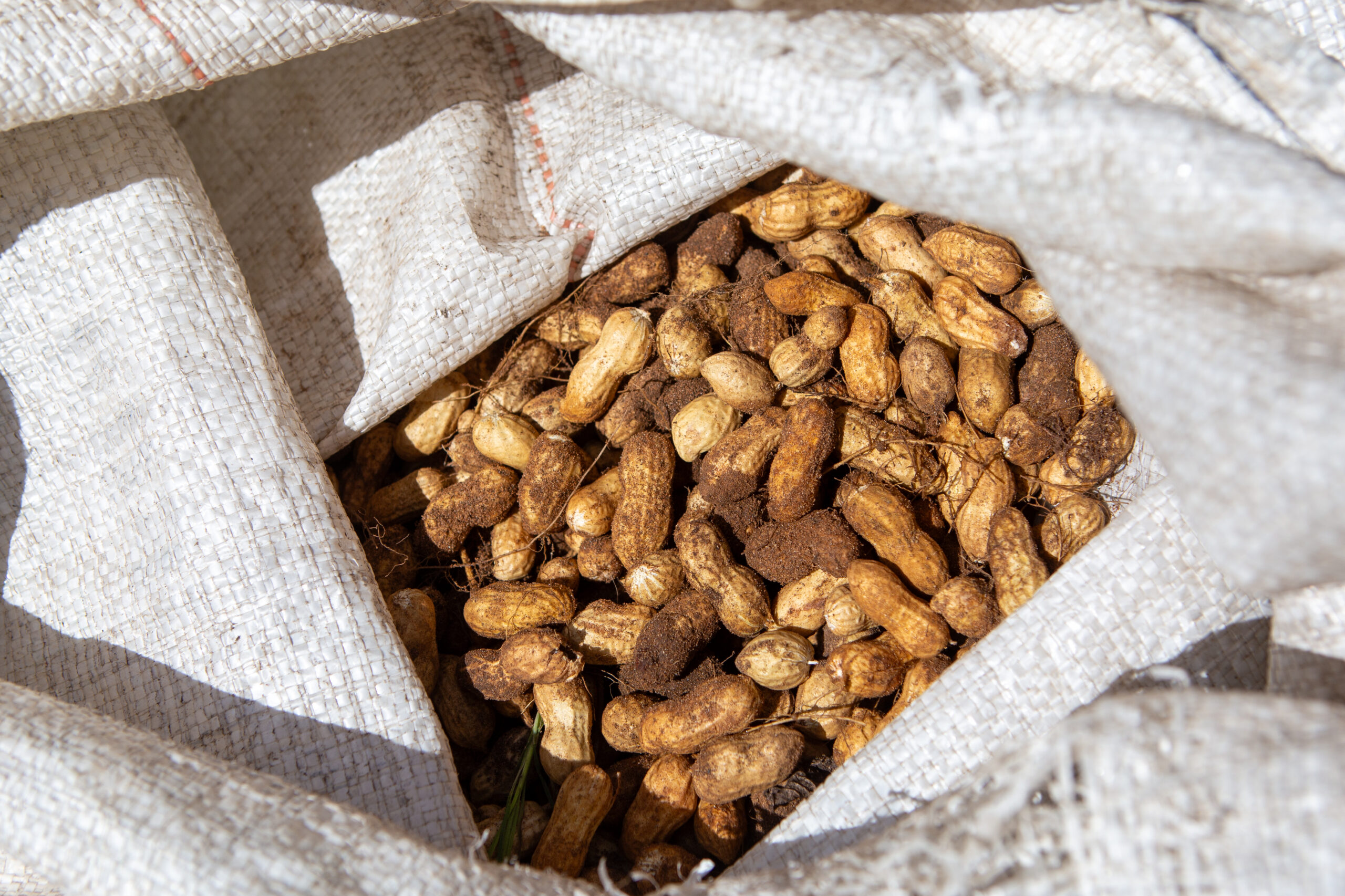
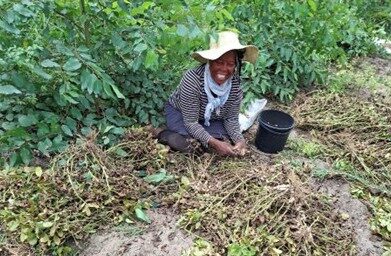
Further into the Eucalyptus compartment, Leya Sibiya is working her way meticulously through a neat stack of ground nut plants. First, she shakes free the soil, then carefully removes the prized nuts embedded in the roots. Leya is the sole breadwinner in her household, supporting five dependents. Her focus is on feeding her family and then sharing the harvest with her community. “Monkey nuts are delicious,” she says with a shy smile. “We cook them in many ways, we either stew them with samp and beans, or we cook them with spinach. We can also roast them with salt or grind them into milk for our porridge.” Surprisingly, ground nuts are highly nutritious and provide a range of health benefits. They are a good source of protein, fibre, and healthy fats, and are rich in antioxidants, vitamins, and minerals. So, by including the nuts in their diet, Leya is boosting her family’s health and wellbeing.
The Symbiotic Relationship
From KwaMbonambi, we travel south to Port Durnford, where a new intercropping project has recently begun in the SiyaQhubeka Forests plantations. There are two groups registered for the project in the area, the Nkonjane Community with 17 members and the Matolenjeni Community with 45 members. A total of 65 hectares have been planted thus far and the project moves strategically between newly planted forestry compartments, because as soon as the canopy closes, the crops cannot grow.
Out in a field, a band of hard-working Gogo’s weed a compartment that seamlessly blends, eucalyptus seedlings with dry beans and ground nuts. The Gogo’s chat and listen to a small battery-operated radio as they work the land. Just then a rogue herd boy allows his cattle to stray into the plantation… and suddenly, the quiet scene erupts! In no time, the band of Gogo’s are screaming and whistling at the herd boy. The message is clear: VOETSEK! A few stones are tossed, and the cattle sidestep their way out of danger. The young trees and veggies will live to see another day.
“When the community plants a compartment, I pretty much hand over the responsibility to them,” muses Siyabonga Mathebula, SQF’s Silviculture Forester for the area. “I trust them to maintain the land, to weed it and protect it. I do make sure there are no herbicides or pesticides used and we will step in to assist with maintenance if necessary.” Mathebula explains the benefits of crop rotation, which range from soil health and fertility to improved biodiversity. Legumes improve soil structure, making it more aerated and better at holding water. In this way, the intercropping project is not only benefiting people, but the environment too. He adds that a further benefit to forestry is that intercropping helps protect the topsoil from washing away and eroding during heavy rains.
Farming for the Future
This project seamlessly blends community-led agriculture with commercial forestry, as the hard edges of production give way to something more symbiotic and co-beneficial. Sharing the land and resources fosters good community relations and helps to strengthen the communities that surround the plantations. Intercropping also means that the communities have a vested interest in protecting crops (and trees) and the ecological benefits result in healthier soil for future generations.