
How are drones used across forestry operations?
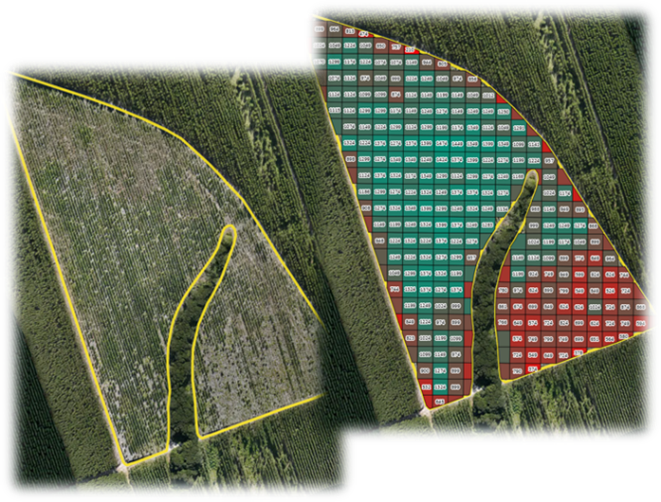
Sappi’s Precision Forestry team have strategically identified several forest operations that could maximise the value of UAS (Unmanned Aerial Systems) to the business. Recent operational efforts focus on tracking seedling stocking, early in the planting season, to make sure plantings are done correctly from the beginning of a tree’s journey. During fire season UAS have been deployed to ensure burn conformance and provide air support for better risk decision making on the ground. Another area where UAS have great potential is for stock quantification on woodchip piles and log stacks, which is becoming a standard practice across the industry due to the faster turn around times between data acquisition, flight times and the production of operational results. More recently, successful deployment of UAS for asset security monitoring by service providers have seen UAS used to quantify timber theft and undertake disaster assessments. Moving forwards, I believe even greater opportunities for UAS will be realised, including pro-active risk mitigation and maintenance inspections in both the plantation forests and at the mills.
How can UAS improve operational efficiency, reduce costs and minimise environmental impact?
The capacity for UAS technology to improve operational efficiencies is a central tenet to its rapid adoption across many forest operations, especially where the frequency of the information required makes traditional ground surveys too costly and intensive in terms of human capacity. Good examples of this are seedling audits and stock estimations.
Near-real time information is becoming a business requirement, which has seen the industry moving quickly from once-a-month stock measurements to weekly or daily counts. This has forced data scientists to think about real time measuring devices, using internet of things (IOT) devices and smart sensors to remotely capture, record and analyse results into data rich dashboards for accurate and fast decision making. UAS as a once off investment offer a good return in a shorter space of time, allowing flexibility to survey and automate multiple surveys on demand, improving accuracy and efficiency over human sampling efforts.
Thermal and other specialised sensors, enable UAS to detect elevated levels of gases including sulphur, carbon dioxide or hydrogen sulphide, all of which are harmful to human and environmental health. The use of UAS to monitor gas emissions has been tested in various manufacturing domains including forestry and while these current applications are limited, and specialised, UAS are being tested for a variety of environmental monitoring and compliance scenarios – including tracking illegal and environmentally destructive activities such wildfires.
How does integrating UAS into forestry management strengthen data-driven decision-making?
Using well established process flows, developed by experienced data scientists and service providers, will enable us to standardise and benchmark the way information reaches the forestry user. Manoeuvring data from specialised processing software, through organisational servers and then to IT systems remains a challenge. However, ensuring that the respective users can access production ready data on their standard systems is critical. Working with the correct user to make sure that results are reliable, can be obtained quickly and are trusted, has also proved pivotal in supporting data-driven decisions.
What is the broader role of emerging technologies in modernising forestry and ensuring the sector remains globally competitive?
I believe forestry has fully embraced the industry 4.1 era and the technological advances that offer intelligent solutions and add direct business value. The competitiveness between service providers, and the elaborate waiting times on new drone equipment and sensors used in forestry, shows the level of demand existing both locally and internationally. With plug and play systems for new, or emerging, technologies now readily available, they offer cheaper alternatives to the expensive first-generation equipment and sensors. These advances have given rise to a myriad of innovative applications already being showcased in scientific publications by both local and global research institutions.
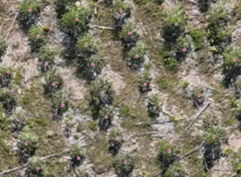
Seedling counting and stocking assessments
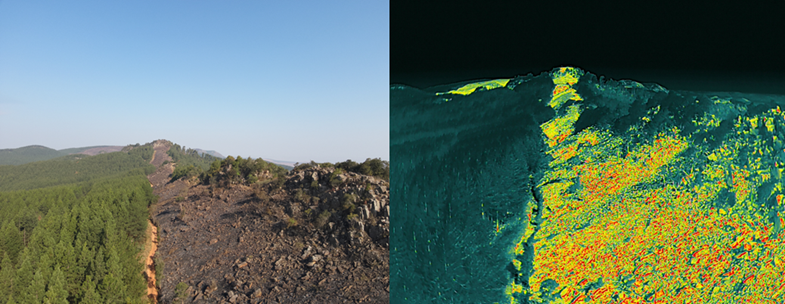
Fire break conformance monitoring
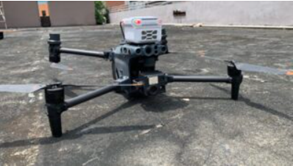
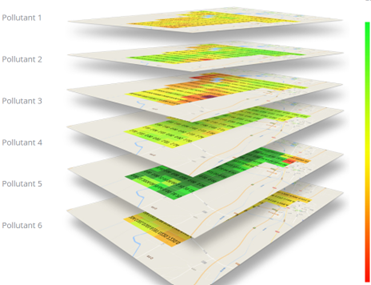
Gas sniffer module mounted on a drone with multiple gas detection capability
What are the best practices for bridging the gap between research innovation and practical implementation within industry?
Having the right people in your team, who are driven to deliver simplistic solutions to make somebody else’s work easier, is half the win. Then using your research skillset to learn your customers’ needs and provide the most practical solution, bridges the implementation gap effectively.