

Our forests provide much needed resources for our daily living. They are a source of timber for housing and construction, paper, packaging, essential oils, specialised material, such as tannins, even specialised fabric such as viscose. As the world population increases, the demands on forests concomitantly increases, however, forests may not be able to keep up with supply.
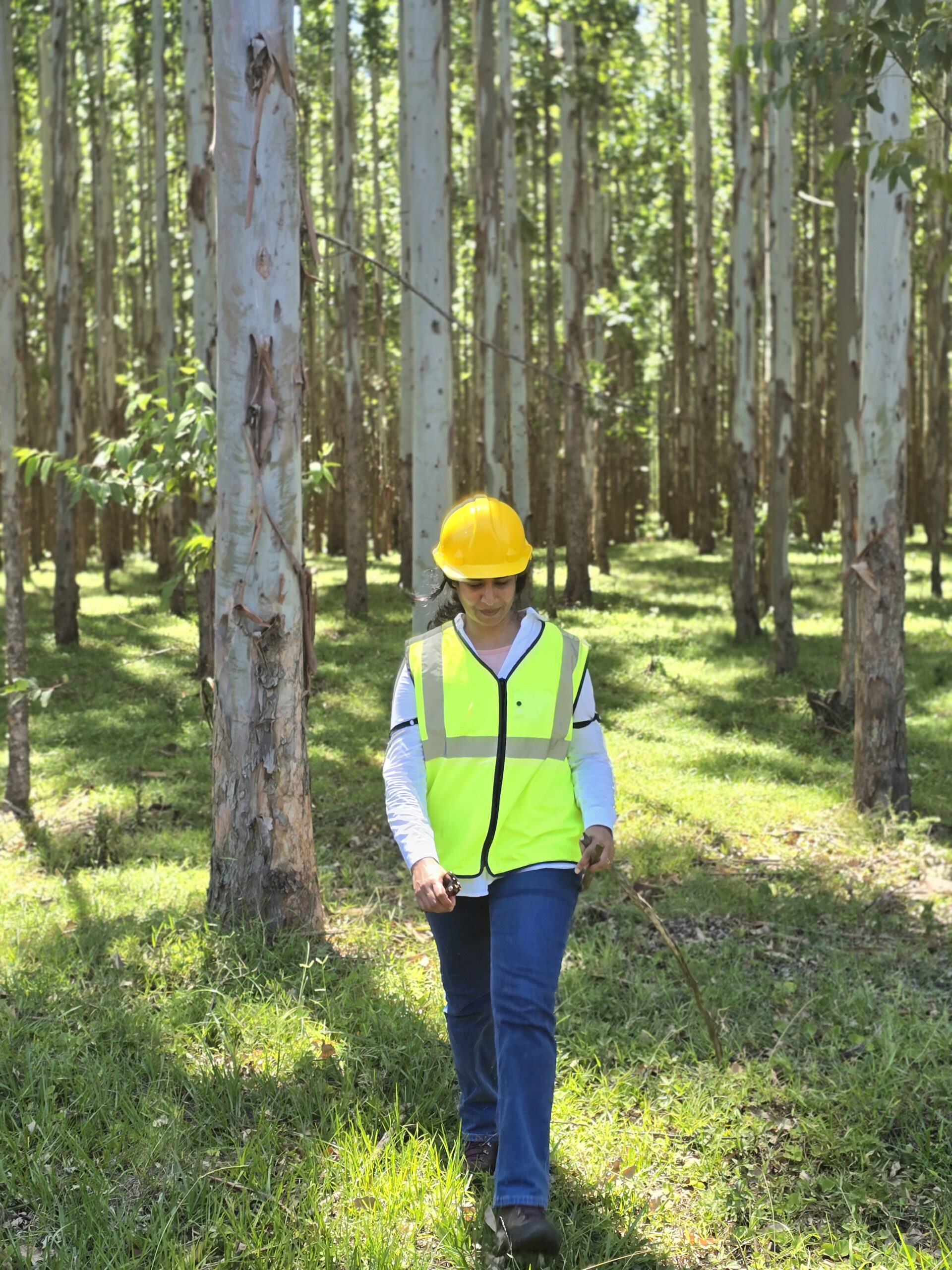
The challenge is that forest productivity is under threat from climate change and competition for agricultural land. Increased temperatures, shifting rainfall patterns and emerging pests and pathogens are placing unprecedented pressure on tree health. What is required is a high level of productivity from limited forest plantations. At the heart of this endeavour is the rapidly developing field of genetics and genomics. Innovation in these areas are providing deeper insight into how trees respond to stress associated with climate change such as heat, cold and drought stress, pest and disease onslaughts, and changing soil conditions. The question of how individual trees within a species are different from each other at a molecular level can be unpacked and further interrogated to select the best trees to plant under certain environments for improved productivity. Molecular research provides us with the tools to respond proactively rather than reactively.
Genomics is the study of the full complement of genes in an organism. The sequencing of tree genomes and those of various agricultural crops has accelerated over the past decade largely due to the decrease in the cost of sequencing, the emergence of new sequencing technologies, and the increase in computational power and analytical expertise. On the South African landscape, genomic resources for Pinus, Eucalyptus and Acacia species enable us to find genetic markers for important traits. A branch of genomics, called transcriptomics, focuses on the expressed portion of the genome, honing in on the gene and pathways that are implicated in these traits.
These technologies provide a lens into (i) the genetic diversity and structure of tree populations; (ii) important adaptive traits like drought tolerance, disease resistance, growth; (iii) pathogen and pest interactions at the molecular level; and (iv) the gene-environment interaction that shapes how trees respond to a changing climate.
Molecular genetics has already been adopted in forest tree species. The Forest Molecular Genetics –Eucalyptus and Pine Pathogen Interactions (FMG-EPPI, FABI, University of Pretoria) – Precision Tree Breeding Platform conducts routine DNA fingerprinting in Eucalypt and Pine species. DNA fingerprinting, as the name implies, involves generating a unique DNA profile for each individual tree. DNA profiles can be used to confirm identity and parent-offspring relationships, among other applications. This allows forestry companies to determine if the proper clone has been deployed at a specific site or to determine if a seedling is the product of a particular cross.
We are now in the era of Precision Forestry and the information garnered from molecular insights contributes to this approach. Here, genetic insights guide decisions on early selection and deployment instead of relying solely on traits that are observed in the field (phenotype) once trees are already established. If we can identify individuals (genotypes) that harbour desirable traits, there is potential to accelerate breeding cycles, protect the yield and minimize failures. The identification of such desirable genotypes stems from discovered DNA markers. These markers become powerful tools in breeding programs, which employ marker aided selection or genomic selection to reduce the time frame to select elite trees. This approach ensures that the next generation of forests is both productive and better adapted to stress.
There are dual benefits of adopting molecular genetics in precision forestry. One is environmental, where better-adapted trees do not require as much intervention, are able to withstand drought or heat stress more effectively, and are able to maintain ecosystem services including carbon sequestration and habitat provision. The second benefit is economic. Precision genetics decreases risk, improves the predictability of the yield, and enhances the competitiveness of forestry companies in terms of sustainability credits.
The only way to achieve success in the forestry sector with an ever-moving goal post due to climate change is through strong partnerships. Any new technology development or scientific discovery has to be linked with the practical needs of industry. The forestry value chain is a major contributor to rural economies, employment and the SA GDP. At each step in the value chain, there should be intervention that is academically sound and logistically implemented, but importantly, of benefit. Types of collaboration with industry could be in the form of breeding programmes where researchers and industry partners co-design the project around specific problems, shared field trials that test genotypes under various climatic conditions, sharing of data from field and controlled conditions, and joint training programmes that involve academics and industry members to exchange expertise between the parties. In addition, government plays a pivotal role in supporting such interactions. Such partnerships enhance resilience, productivity and sustainability in forestry.


As we think about resilience, productivity and sustainability, we must think about the next generation of workforce in forestry. South African youth will be playing a role in sustaining our forests one day. How best do we capacitate them to play this role? Sadly, many young people, especially girls, are not entering into STEM fields. It is important that we encourage girls to engage with STEM as this field will open tremendous opportunities. A frequent limitation is a lack of confidence in mathematics at a high school level, a subject that unlocks a science career. This barrier can be overcome with the right role models and tutors. When girls see women excelling in the science field, they are inspired to try harder. More hands-on learning opportunities must be provided. This year our team will join the MENTher programme, initiated at the University of Johannesburg and directed by Dr Lungile Sitole, where female academics will mentor and host high school learners in STEM fields. We need to create more supportive ecosystems to encourage learners to become scientists. Scholarships, networking opportunities and supporting mothers help young women to remain engaged as they progress in their careers. As professionals in the field, when we share our stories and connect the scientific questions to real world problems, e.g. climate change and the need for sustainable forests, we can influence young up and coming forest scientists. Our role as scientists is to inspire and ignite passion and purpose. Sustainable forestry not only requires technology but talent. It is diversity that fuels discovery. When our research institutions and industry are populated with talent that reflects the full spectrum of our society, we unlock perspectives and solutions that would otherwise remain hidden.
While genetics is at the frontline of discovery, the future of forests and the communities that rely on them, will be shaped by our willingness to integrate scientific insight with purpose, deliberate inclusiveness and shared responsibility.